





GSU Convenes Church Leaders to Strengthen Pastoral Care for Students
Gwanda State University (GSU) has convened church leaders from various denominations for a collaborative dialogue aimed at strengthening pastoral care for students and staff, while reinforcing cooperation between the University and faith-based institutions.
The engagement brought together representatives from Family of God (F.O.G), Christ Embassy, Apostolic Faith Mission in Zimbabwe (AFMIZ), Zimbabwe Assemblies of God Africa – Forward in Faith (ZAOGA FIF), African Apostolic Church (AAC), the Methodist Church of Zimbabwe, the Roman Catholic Church, Assemblies of God, the Seventh Day Adventist Church (SDA), and the United Methodist Church. The platform enabled pastors to fellowship, share experiences, and reflect on coordinated approaches to student support within the university environment.
Explaining the objectives of the meeting, the University Chaplain, Rev. Phathisiwe Dube, said the gathering was meant to allow church leaders to “relax, fellowship and know each other,” while recognising that “the campus has spiritual needs for members of staff and students.” She added that the dialogue will allow church leaders to exchange best practices for ministry and pastoral care while encouraging them to promote the University to their respective congregations.
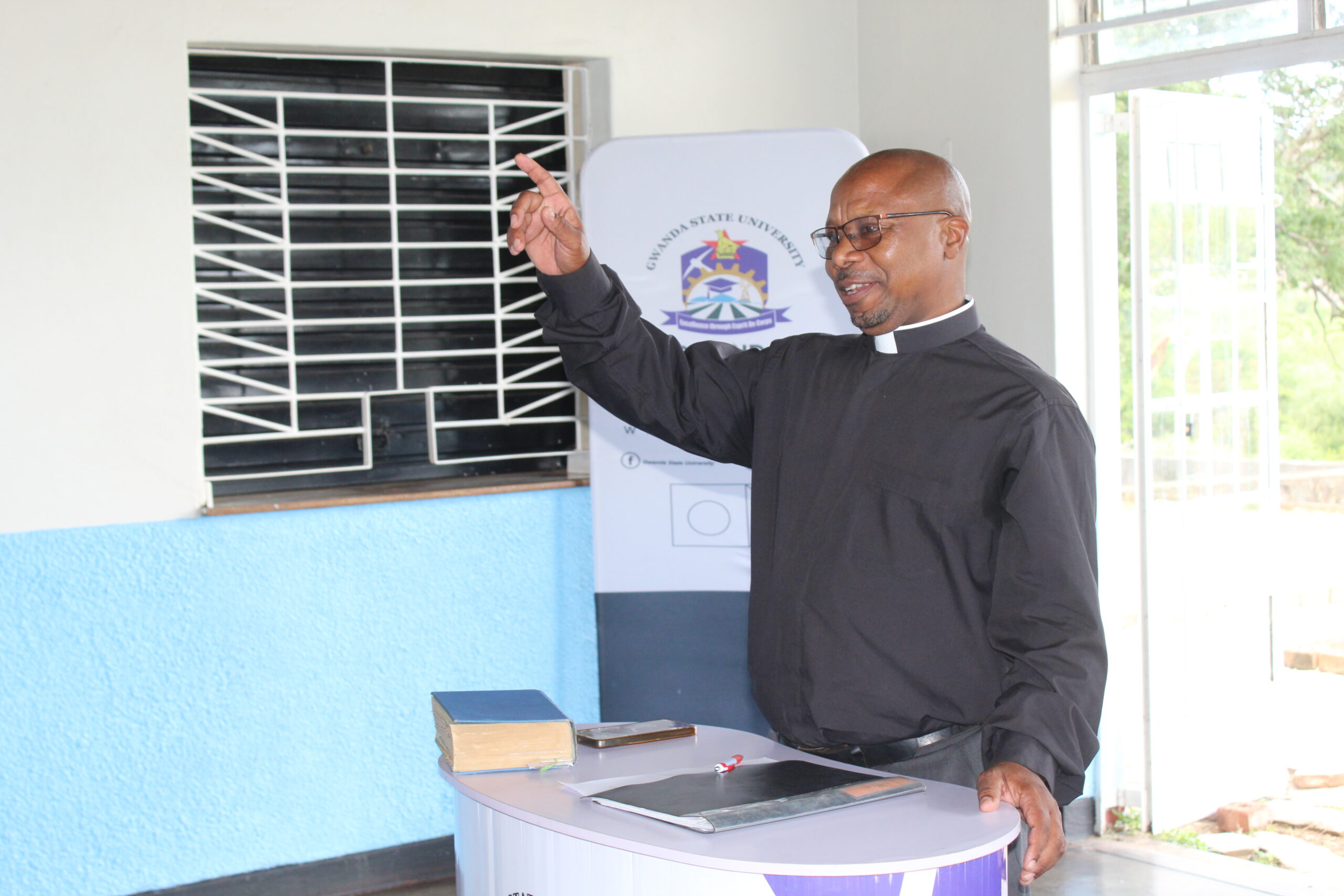
Delivering the main address on enhancing pastoral care, Father Simon T. Mabhena, representing the Roman Catholic Church, commended GSU for allowing pastors from different churches to support the University Chaplain. “We want to help each other find ways of helping students and staff under our care,” he said, describing pastoral care as “taking care of the needs of staff and students,” and noting that a pastor is fundamentally “a shepherd.”
Father Mabhena emphasised the importance of presence and availability, saying pastors are called to carry the presence of the Lord to others and must therefore be accessible to those they serve. He observed that students often experience significant stress during their time at university, particularly when adjusting to new environments, and stressed the importance of proper orientation and continued support.
Calling for empathy, he urged pastors to avoid judgement, noting that “every student’s problem is important” and that “no problem is bigger than the other.” He further encouraged church leaders to know their students, understand their challenges, and provide consistent spiritual nourishment, adding that pastoral leaders must also be mindful of time allocations on campus and teach students discipline and accountability.
Contributing to the discussion, Rev. Thomas Mundicha, representing ZAOGA FIF, said pastors, while shepherds, must also be willing to learn from others. He advocated for structured student involvement within campus ministries, noting that giving students responsibilities helps them “stay on the narrow path” and ensures continuity when pastors are not present.
Pastor Brian Ncube, representing the SDA, added that effective pastoral care requires understanding the real needs of students. He called on pastors to conduct needs analyses, suggesting the use of surveys or questionnaires to identify challenges faced by students and prescribe appropriate solutions. He also emphasised the need for closer engagement with students and stronger collaboration with professional counsellors, urging that “prayer and counselling” should work together in supporting student wellbeing.
During the plenary discussion, Evangelist Thembelani Mkhwananzi, representing AAC, outlined key action points, including keeping communication platforms active so pastors and the University Chaplain can coordinate prayer whenever students face challenges. He also proposed facilitating transport for students to attend special church services in surrounding areas and exploring ways for the University to support pastors’ engagement with students on campus.
The Church Leaders Collaboration dialogue reaffirmed Gwanda State University’s commitment to holistic education, recognising that academic success is strengthened when students’ spiritual, emotional, and social wellbeing are equally supported.